
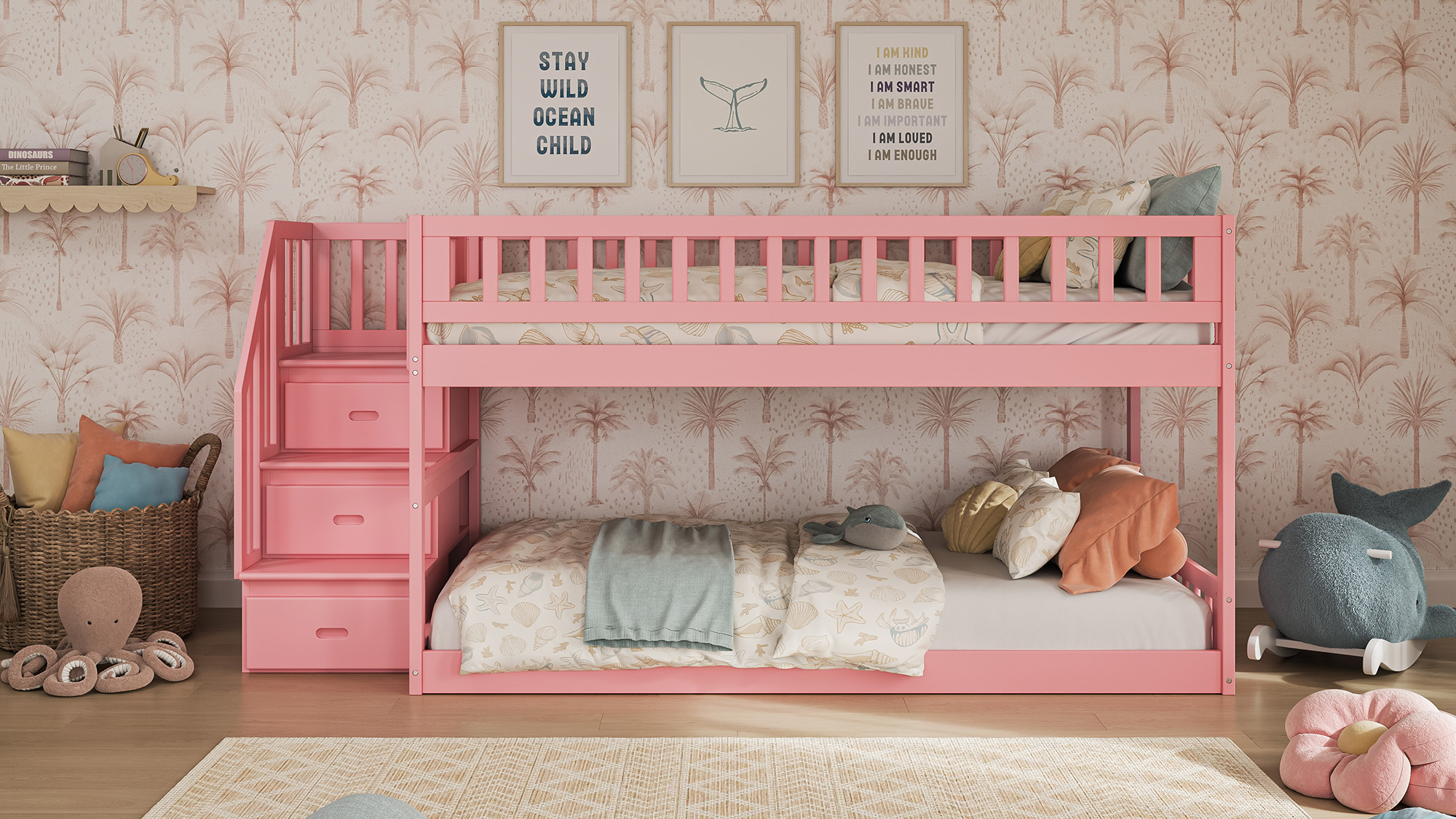
The right bunk bed can make a child’s room feel more organized, more flexible, and easier to use every day. It can create room for a desk, dresser, play area, or reading corner while giving siblings or guests a comfortable place to sleep.
With different sizes, access styles, storage features, and configurations to choose from, finding the right bunk bed comes down to how the room needs to work. This guide covers room planning, bunk bed sizing, ladder versus staircase designs, storage and trundle options, and features that can make the bed more useful as your family’s needs change.
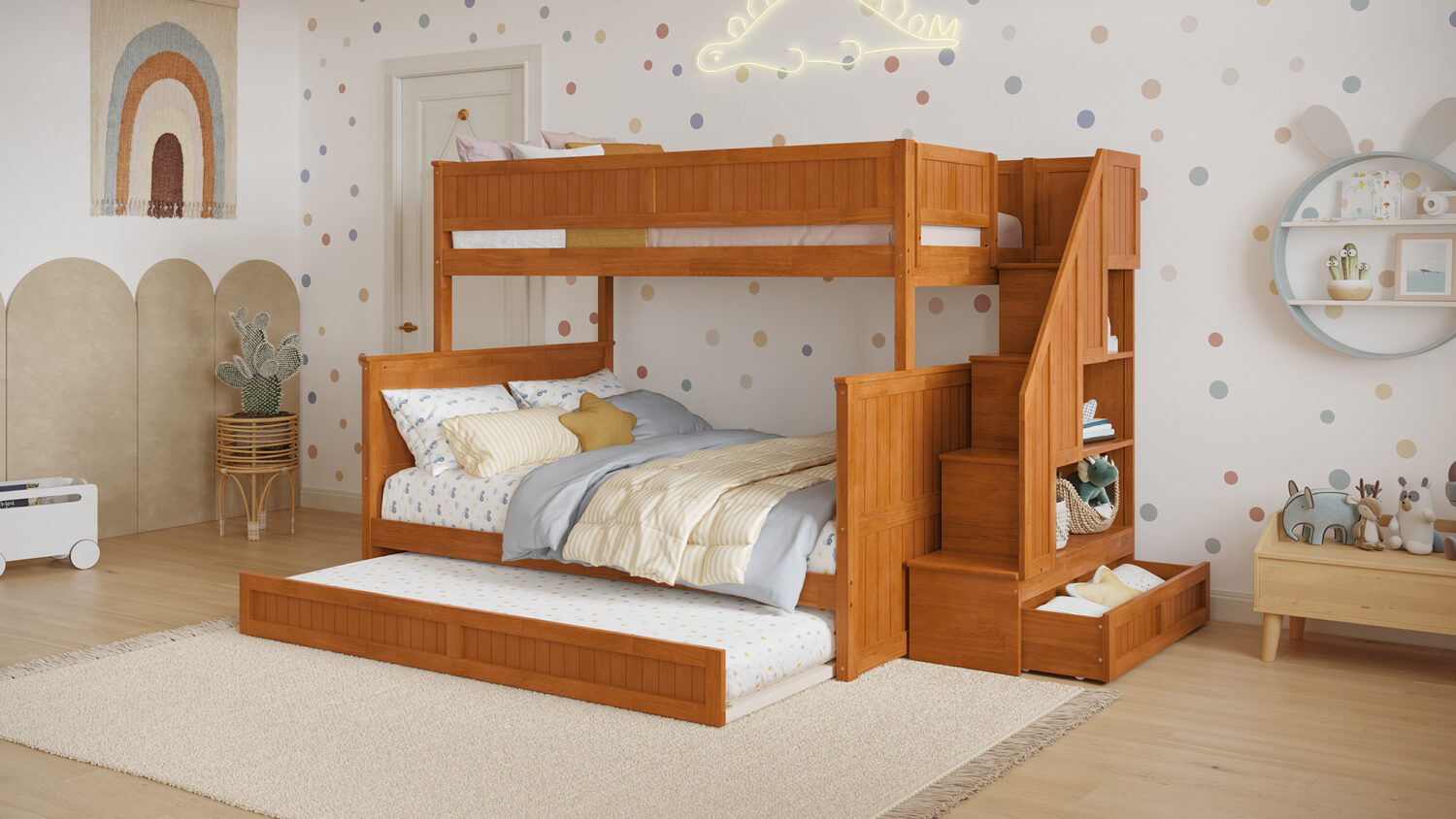
A bunk bed affects almost everything around it. It determines how much floor space is left, where storage can go, how the room is shared, and how easy the space feels to use every day.
In a smaller bedroom, a bunk bed can open up space that would otherwise be taken by two separate beds. In a larger bedroom, it can create a clear sleep zone while leaving room for homework, reading, play, storage, and downtime.
For shared bedrooms, this can be especially helpful. Instead of placing two beds wherever they fit, one strong furniture piece helps organize the layout and gives each child a defined place to sleep.
The best bunk bed is not always the biggest or the one with the most features. It is the one that makes the room work better.
Before choosing a bunk bed, look at the room as a whole. The best option is not only the one that fits against the wall, but the one that leaves the bedroom easier to move through, organize, and use every day.
Start with the practical details: ceiling height, window placement, closet doors, baseboards, outlets, and the walkway around the bed. Then think about how the bunk bed will function in the space. Will there be room for a ladder or staircase? Will drawers need space to open? Will a trundle need clearance to pull out when guests or sleepovers come up?
A bunk bed should help the room feel more planned, not more crowded. When the layout is considered first, it becomes easier to choose the right size, access style, storage features, and extra sleep options for the way the room actually works.
Bunk bed size is one of the most important decisions because it affects comfort, layout, and how long the bed may work for your family. Many AFI bunk bed models are available in Twin-over-Twin, Twin-over-Full, and Full-over-Full configurations.
A Twin-over-Twin bunk bed is often a strong choice for younger children, smaller bedrooms, or shared rooms where saving floor space is the priority. It keeps the overall layout more compact while still creating two separate sleep spaces.
A Twin-over-Full bunk bed offers more flexibility. The larger lower bunk can work well for an older child, a guest, or a room where one bed needs more sleeping space without taking over the entire floor plan.
A Full-over-Full bunk bed creates the most generous sleeping arrangement. It may be useful for older children, teens, guest rooms, or shared spaces where both bunks need more room.
The right size depends on the room, the children using it, and how long you want the bed to remain useful. Choosing the right configuration from the beginning can help the bedroom feel better planned over time.
One of the biggest bunk bed decisions is whether to choose a ladder or staircase design. Both can work well, but they create a different footprint, look, and everyday experience in the room.
A ladder bunk bed is usually the more compact option. It keeps the design efficient and may be a better fit for rooms where floor space is limited. Ladder designs can feel simple, classic, and easy to place.
A staircase bunk bed has a more substantial presence and can make the top bunk feel easier to access. While it usually requires more floor space than a ladder design, that extra space can also add function. Some AFI staircase bunk beds include built-in bookshelf storage or drawers within the stairs, giving books, toys, clothing, and everyday items a natural place to go.
AFI staircase bunk beds also allow the staircase to be set up on either side, which gives families more flexibility when planning around windows, closets, doors, and walking space.
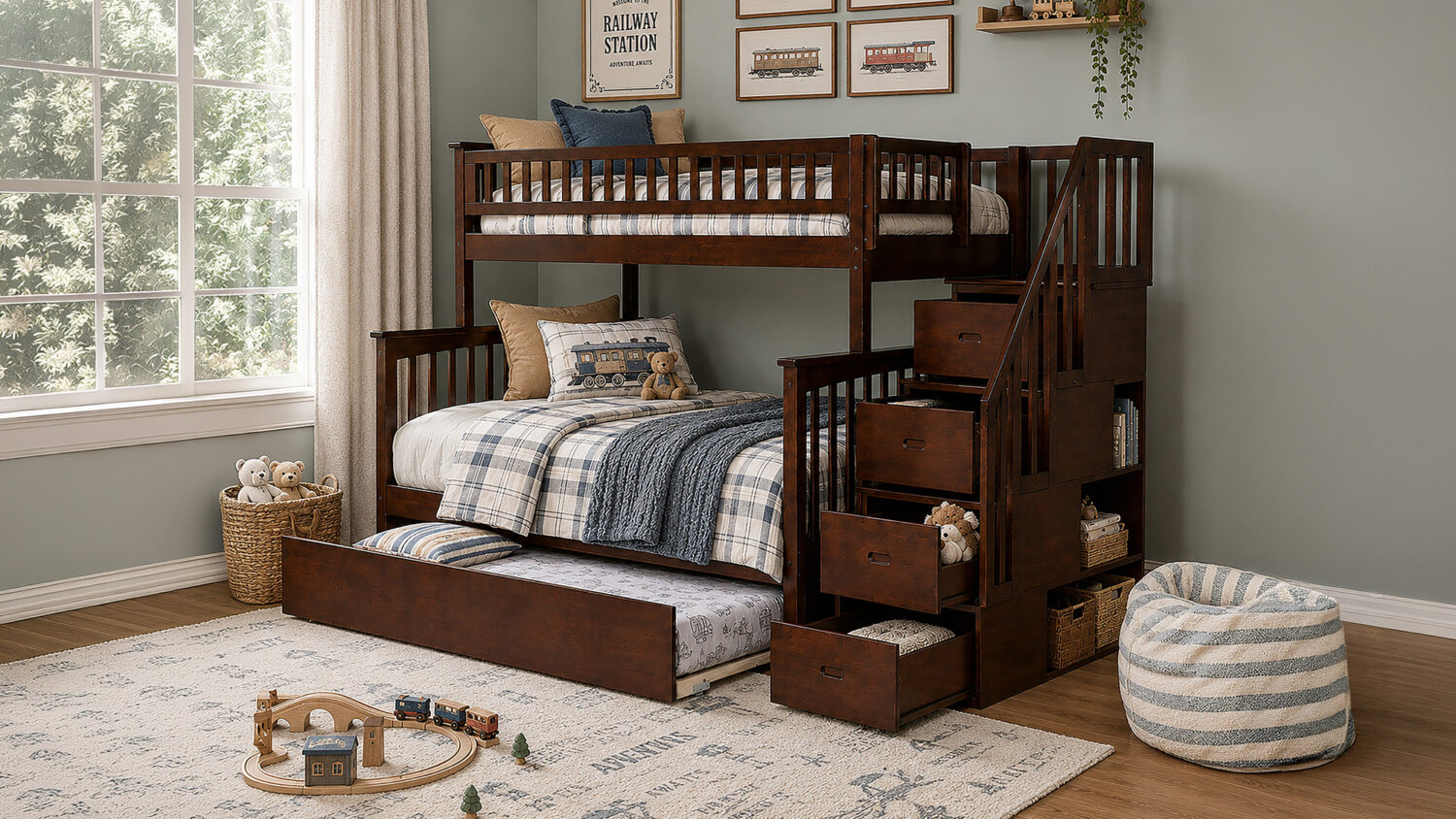
Kids’ rooms have to hold a lot: clothing, books, toys, bedding, school items, favorite stuffed animals, and the everyday pieces that never seem to stay in one place. A bunk bed can help when storage is planned into the layout from the beginning instead of added around the edges later.
AFI offers bunk bed designs with storage options depending on the model, including under-bed storage drawers, staircase drawers, and staircase bookshelf storage. These features give families practical places for the things children use often, while helping the room feel more organized and easier to live in.
Under-bed drawers can be useful for extra bedding, seasonal items, toys, or clothing. Staircase drawers can keep smaller essentials within reach. Bookshelf-style staircases create a natural place for books, keepsakes, or bedtime favorites without needing another separate piece of furniture.
For rooms that also need to be ready for sleepovers or visiting family, a trundle can add even more flexibility. It creates an extra sleep surface when needed, then tucks away so the room can return to everyday use.
The Dover Staircase Bunk Bed with Storage Drawer and Twin Trundle is a strong example of this kind of thoughtful design. It brings together a staircase layout, storage drawer, and twin trundle, giving the room more function without requiring several separate furniture pieces.
The goal is not to fill the room with more features. It is to choose features that make the bedroom feel easier, calmer, and more thought out. When storage and extra sleep space are worked into the bed itself, the room can do more while still feeling organized.
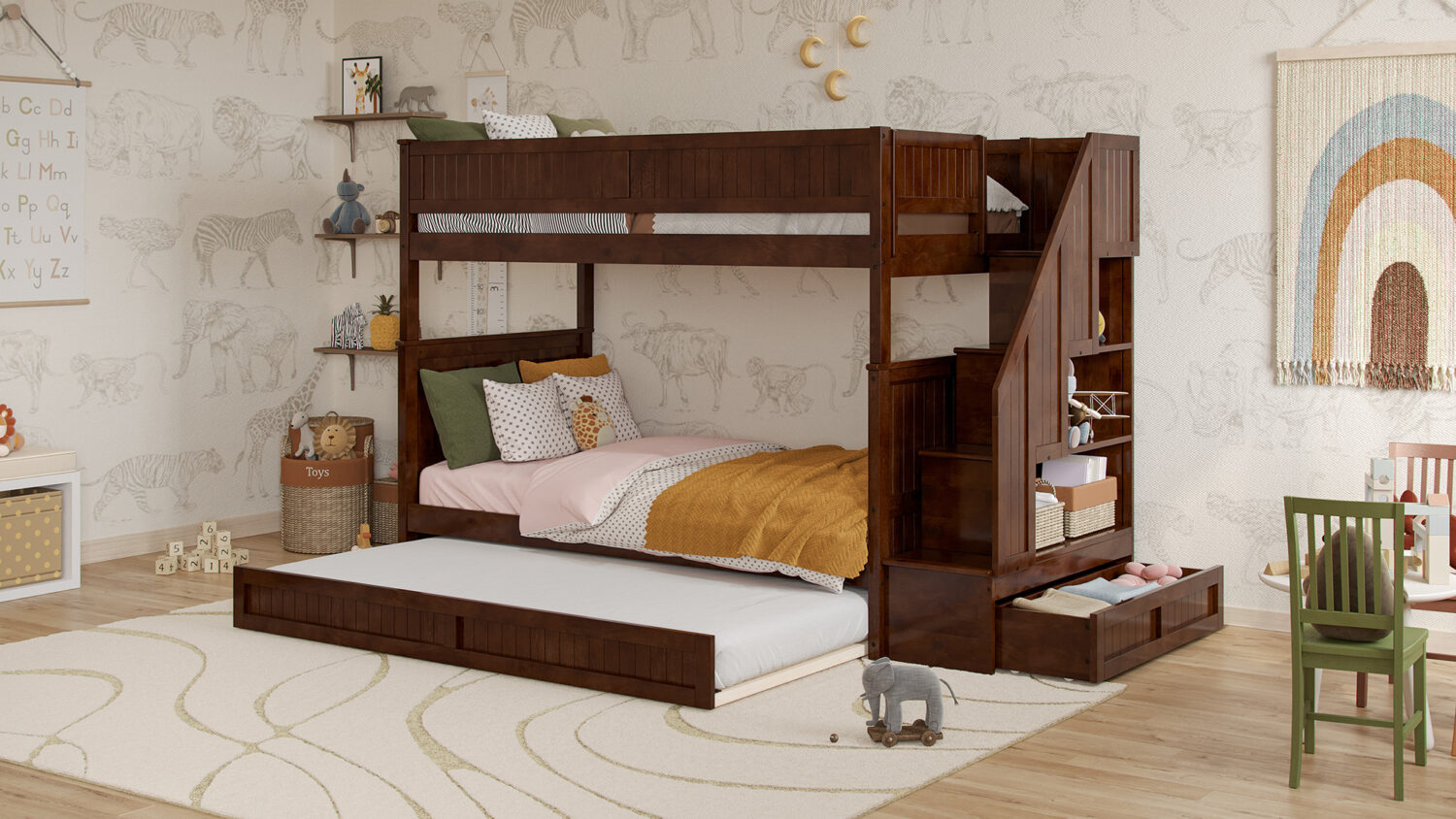
Children’s rooms change quickly. A layout that works perfectly at one age may need to change a few years later. That is why flexibility can be one of the most valuable features in a bunk bed.
Some bunk beds are designed to be separated into two individual beds. This can be helpful if siblings eventually move into separate rooms, if the layout changes, or if the family no longer needs a stacked sleeping arrangement.
A bunk bed that can separate gives the furniture a longer life in the home. Instead of replacing the entire bed setup, the same piece can adapt to a new stage, a new room, or a different sleeping arrangement.
AFI also offers a mini bunk bed where the bottom bunk sits on the floor. This lower layout can be a thoughtful choice for younger children, smaller rooms, or families who want stacked sleeping space with a less towering presence.
A child’s bedroom is not a showroom. It is a place for sleeping, climbing, reading, playing, storing, building, and growing. The furniture needs to hold up to daily life while still helping the room feel warm and inviting.
That is where solid wood construction becomes important. A solid wood bunk bed brings strength and substance to a room that gets used every day. It also adds natural warmth, which can help a children’s bedroom feel comfortable instead of purely functional.
Natural wood tones work especially well in kids’ rooms because they are easy to build around. They can pair with colorful bedding, patterned rugs, playful artwork, soft neutrals, or more classic bedroom styling. As the room changes, the bed can still feel appropriate.
For families who want a child’s room to feel durable, organized, and thoughtfully designed, solid wood is a great option.
A bunk bed has presence, so the rest of the room does not need to be overdone. The goal is to make the space feel useful and comfortable without filling every wall and corner.
Start with the bed as the anchor. Then choose the pieces around it carefully. A rug can soften the room and define the sleep area. Bedding can bring color or texture without overwhelming the space. Storage drawers, stair shelves, baskets, or bins can help keep everyday items from taking over the floor.
The room should still feel like a child lives there. It does not need to look untouched or perfectly styled. But when the main furniture pieces are chosen well, the room can handle real life while still feeling organized and warm.
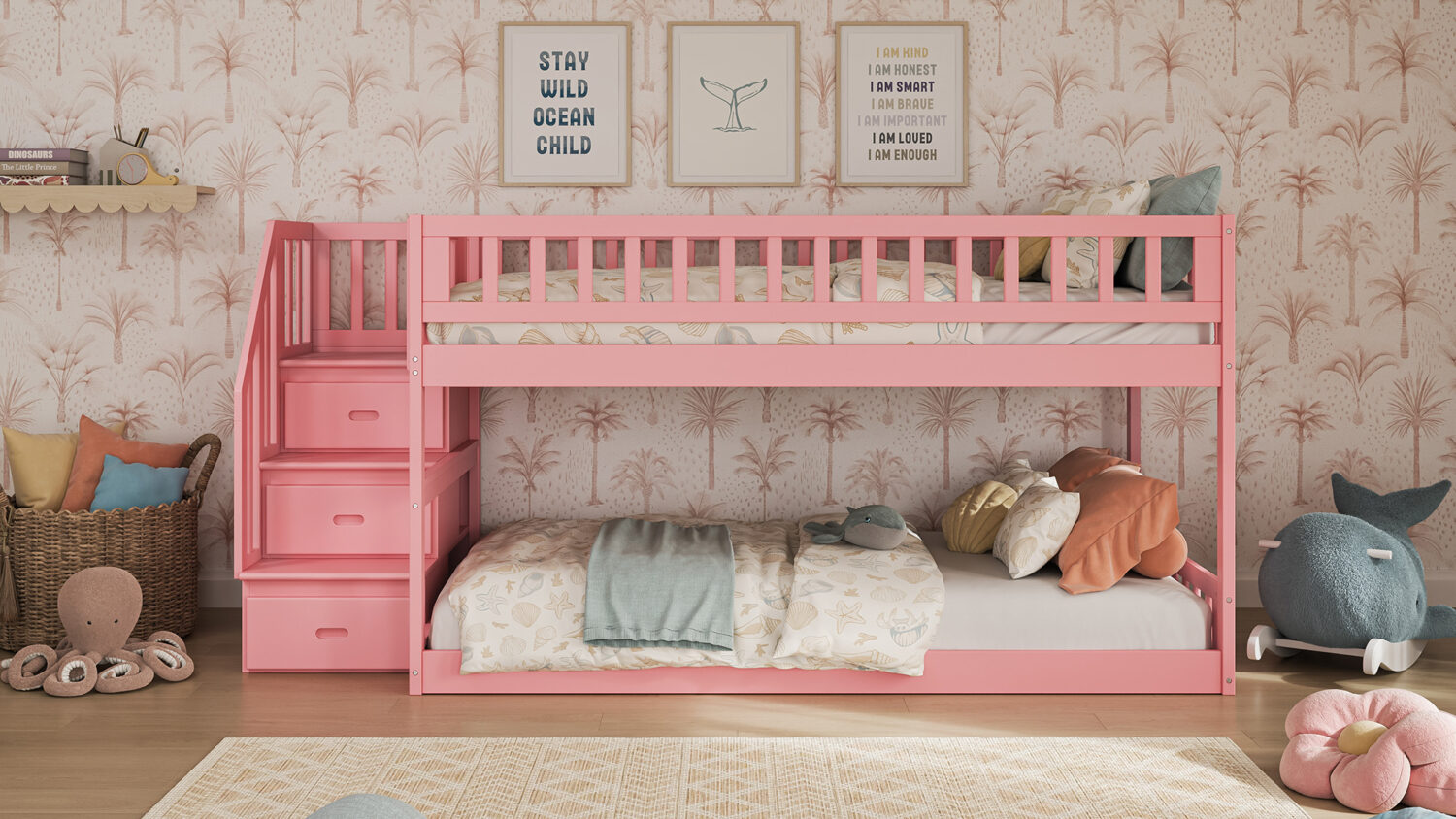
Choosing a bunk bed is really about choosing how the room should work.
A Twin-over-Twin bunk bed can help keep a room compact. A Twin-over-Full or Full-over-Full bunk bed can add more sleeping space for older children, guests, or shared rooms. A ladder design can save space, while a staircase design can feel more accessible and may offer storage or shelving depending on the model.
Storage drawers can help keep the room organized. A trundle can make space for sleepovers and guests. A bunk bed that separates into two individual beds can offer flexibility as children grow. A mini bunk bed can create a lower, more approachable layout for younger children or smaller rooms.
The best bunk bed is not just the one that saves the most space. It is the one that fits the room, supports your family’s routines, and gives the bedroom a more thoughtful way to function.
Explore AFI Furnishings’ bunk beds to compare Twin-over-Twin, Twin-over-Full, and Full-over-Full sizes, along with ladder and staircase designs, storage options, trundles, mini bunk beds, and solid wood styles made for rooms that need to do more.