
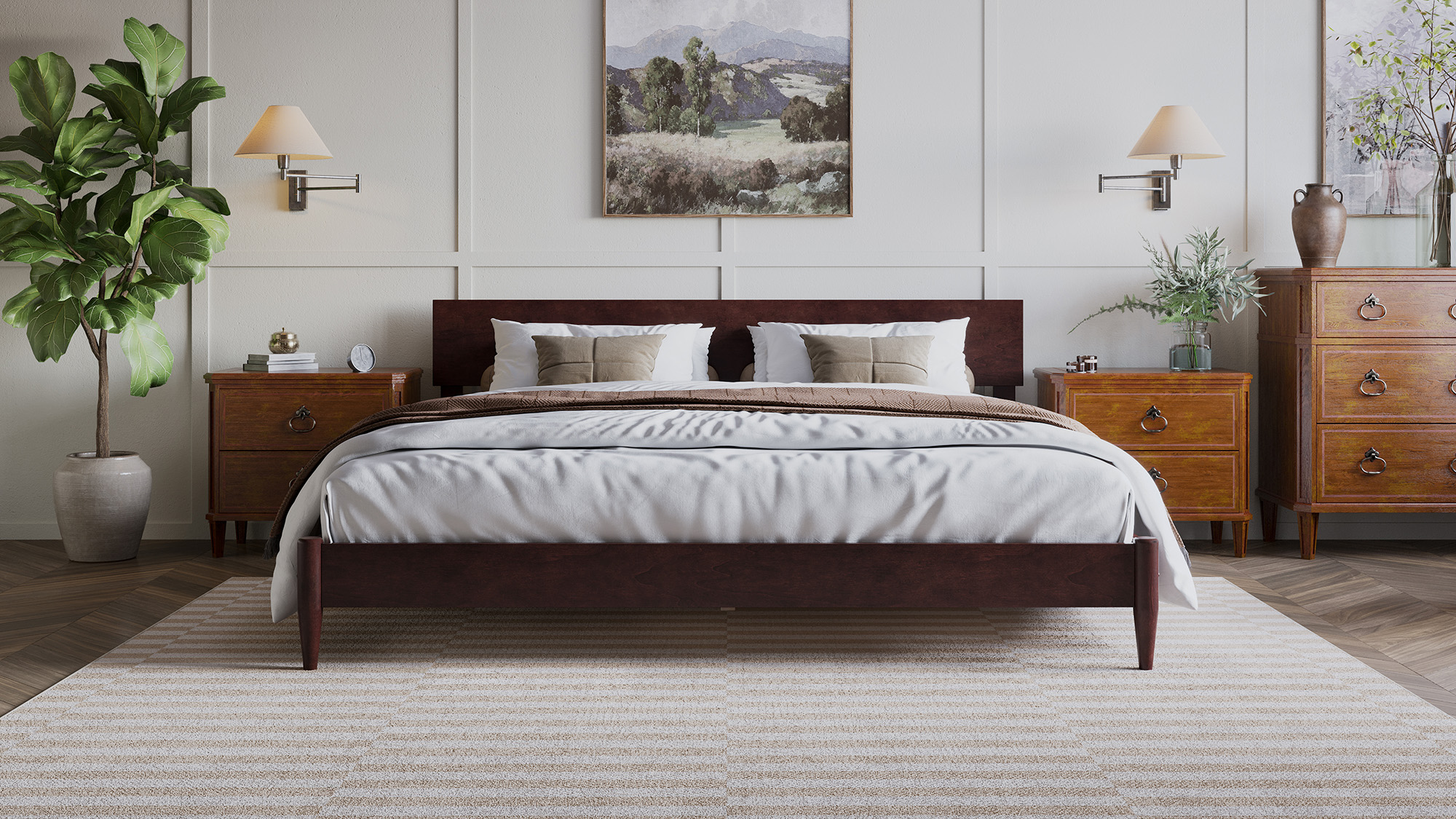
A bedroom can be filled with beautiful details, but the bed is what gives the room its direction. It is the largest piece in the space, the natural focal point, and often the first thing the eye notices. When the bed feels considered, the rest of the room has something to build from.
For today’s home, the best bedrooms do not feel overly decorated or showroom-perfect. They feel collected, comfortable, and intentional. A well-chosen bed can help create that feeling by bringing structure, warmth, texture, and balance to the room.
Solid wood beds and natural wood tones are especially useful in a warm, curated bedroom. They add visual weight without feeling cold, and they bring in the kind of organic texture that makes a neutral space feel layered instead of flat.
In this guide, we’ll look at choosing the right bed, working with wood tones and bedding, and using storage and surrounding furniture to create a bedroom that feels warm, balanced, and comfortable to live in.
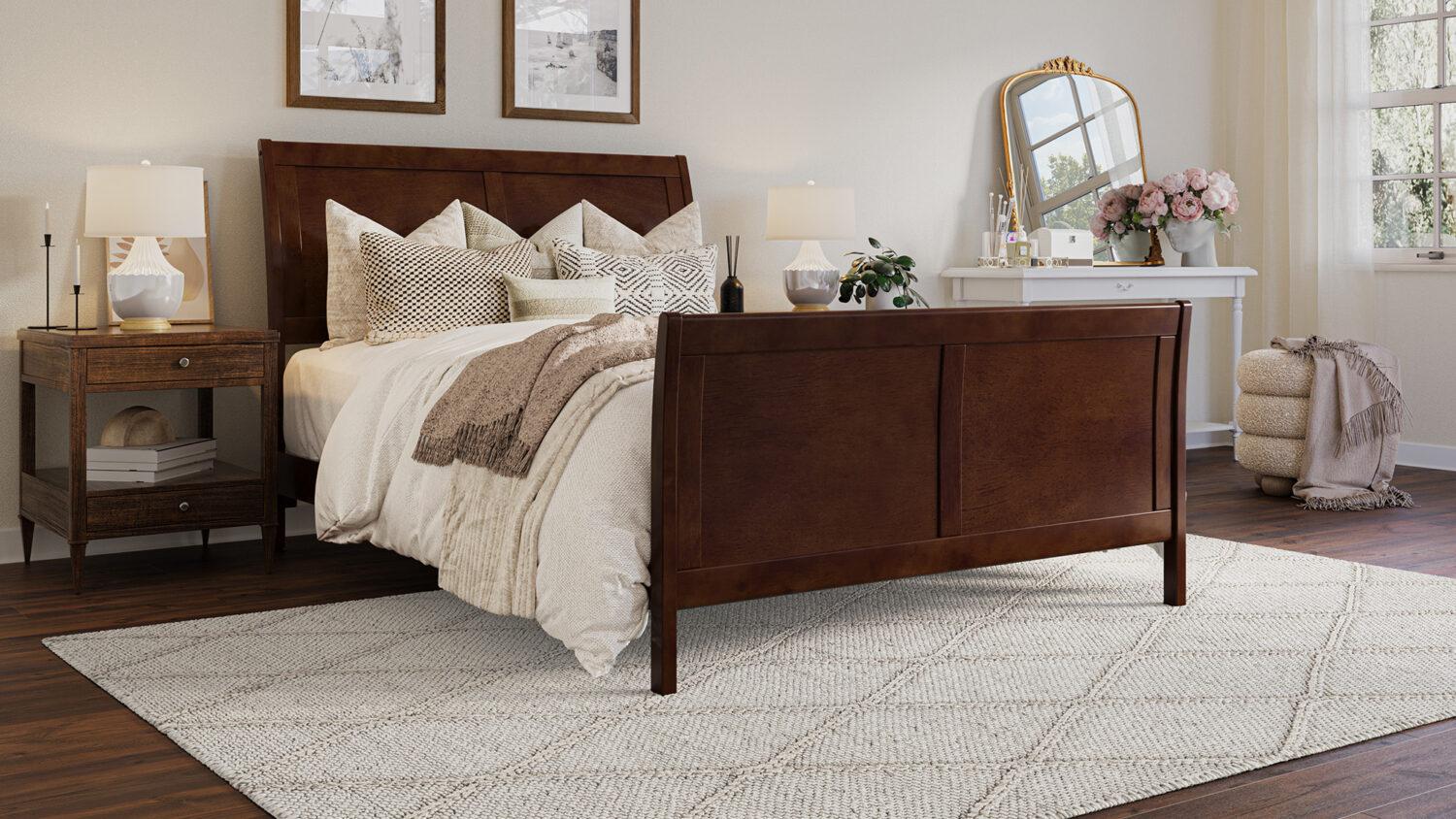
A bedroom usually works best when the bed is treated as the anchor, not just another piece of furniture. Because of its size and placement, the bed sets the tone for the room’s style, scale, and mood.
A bed with a sturdy frame and thoughtful proportions can make the entire space feel more grounded. It gives the room a clear center, making it easier to choose nightstands, lighting, rugs, bedding, and artwork that feel connected.
This is especially important in neutral bedrooms, where the design depends less on bold color and more on material, shape, texture, and balance. A strong bed frame gives the room presence before any decorative layers are added.
Solid wood furniture has a way of making a bedroom feel warmer and more substantial. Unlike pieces that rely only on surface styling, a solid wood bed brings natural character through its grain, tone, and construction.
That matters in a room that is meant to feel collected, not temporary. A solid wood bed supports that kind of design because it brings a sense of permanence, warmth, and quiet structure to the space.
Wood also softens a bedroom visually. Paired with warm whites, oatmeal tones, linen textures, woven rugs, or muted accents, a wood bed can make the room feel calm without feeling empty.
A warm bedroom does not need to be filled with more things. Often, it needs better texture, better balance, and one strong piece to build around.
In a neutral bedroom, texture does a lot of the design work. Natural wood tones bring depth that paint, fabric, and flat finishes cannot always provide on their own.
A warm brown wood finish like our walnut, teak, or light toffee finishes can add richness to cream bedding and soft walls. A lighter wood tone can make the room feel relaxed and airy. A deeper finish can create contrast and make the bed feel more architectural.
The goal is not to match every wood tone perfectly. A curated room often feels more natural when finishes relate to each other rather than repeat exactly. If you’re deciding between stains, painted finishes, or different wood tones, our guide to choosing a wood furniture finish explains what to look for.

The silhouette of the bed has a major effect on the room. A tall headboard can make the bed feel more traditional and substantial, while a lower frame can create a cleaner, more relaxed look.
For a modern neutral bedroom, low-profile platform beds can be especially appealing. Their simpler shape keeps the room feeling open, while the wood finish still adds warmth and texture.
If you want the bedroom to feel more classic, a foundation bed may be a better fit. If you prefer a streamlined setup with built-in mattress support, a platform bed can create a cleaner, more modern foundation for the room. If you’re not sure which support style you need, see our platform bed vs. foundation bed guide for a closer comparison.
The bed should feel inviting, not untouchable. The most beautiful bedrooms often use bedding that feels layered, relaxed, and easy to live with.
Start with a simple foundation: sheets, a quilt, duvet, or comforter. Then add texture through a folded blanket, a woven throw, or linen-like layers. Pillows can bring softness and shape, but they do not need to take over the bed.
A warm neutral palette works especially well here. Cream, ivory, sand, taupe, oatmeal, warm grey, and muted earth tones can create a soft look while still letting the bed frame stand out.
A curated bedroom should feel beautiful, but it also needs to work for real life. The right bed can add function to the room without making the design feel less polished.
For smaller bedrooms, shared spaces, or rooms where extra storage matters, a storage bed can help make better use of the space. Under-bed drawers add useful storage without requiring another large piece of furniture, which can help keep the room feeling more open. If you’re considering that type of setup, our storage bed guide explains what to consider before choosing one.
For guest rooms, kids’ rooms, or flexible spaces, a trundle bed can add an extra sleep surface while keeping the room open when it is not in use. A daybed can also be a thoughtful choice for a room that needs to serve more than one purpose.
The best functional furniture does not look like a compromise. It feels intentional, useful, and appropriate for the way the room is actually used.
Once the bed is chosen, the surrounding furniture should support it. Nightstands, dressers, benches, and storage pieces do not need to match perfectly, but they should feel connected in scale and tone.
If the bed has a strong wood finish, softer accents can keep the room from feeling heavy. If the bed has a lighter finish, darker lamps, artwork, or textiles can add depth. The best rooms usually have a quiet mix of contrast and softness.
Proportion matters here. A sturdy solid wood bed can handle substantial nightstands, layered bedding, and a larger rug. A lower-profile bed may look best with cleaner lines and fewer visual distractions around it.
A modern bedroom does not have to look like everything was purchased as a set. In fact, the most inviting rooms often feel collected over time.
Start with the bed as the strongest piece, then layer in furniture and accents that complement it. A woven rug, linen bedding, warm lighting, simple artwork, and natural materials can make the room feel finished without making it feel overly coordinated.
This approach works especially well with solid wood beds because wood already has natural variation. It gives the room character and makes the surrounding pieces feel more relaxed.
A beautiful bedroom still needs to work for everyday life. Before choosing a bed, think about how the room will actually be used.
A primary bedroom may call for a sturdy bed frame, calming materials, and a design that feels restful at the end of the day. A guest room may need flexibility. A child’s room or shared bedroom may need durability, storage, and room to grow.
The right bed helps the room do what it needs to do. It can create comfort, add storage, make space for guests, or simply give the bedroom a stronger sense of purpose.
A better bedroom starts with a bed that feels intentional. The right frame can bring warmth, structure, texture, and function to the entire room.
Solid wood construction and natural wood tones are especially valuable in a curated bedroom because they add depth without making the space feel busy. Paired with layered bedding, soft lighting, and thoughtful surrounding furniture, the bed becomes more than a place to sleep. It becomes the piece that gives the room its shape.
Start with a well-chosen bed, then build the room around it with materials, textures, and details that feel warm, useful, and made for the way you live.
Ready to start with the piece that anchors the room? Explore AFI Furnishings’ collection of platform beds, foundation beds, low-profile platform beds, storage beds, trundle beds, and daybeds.