
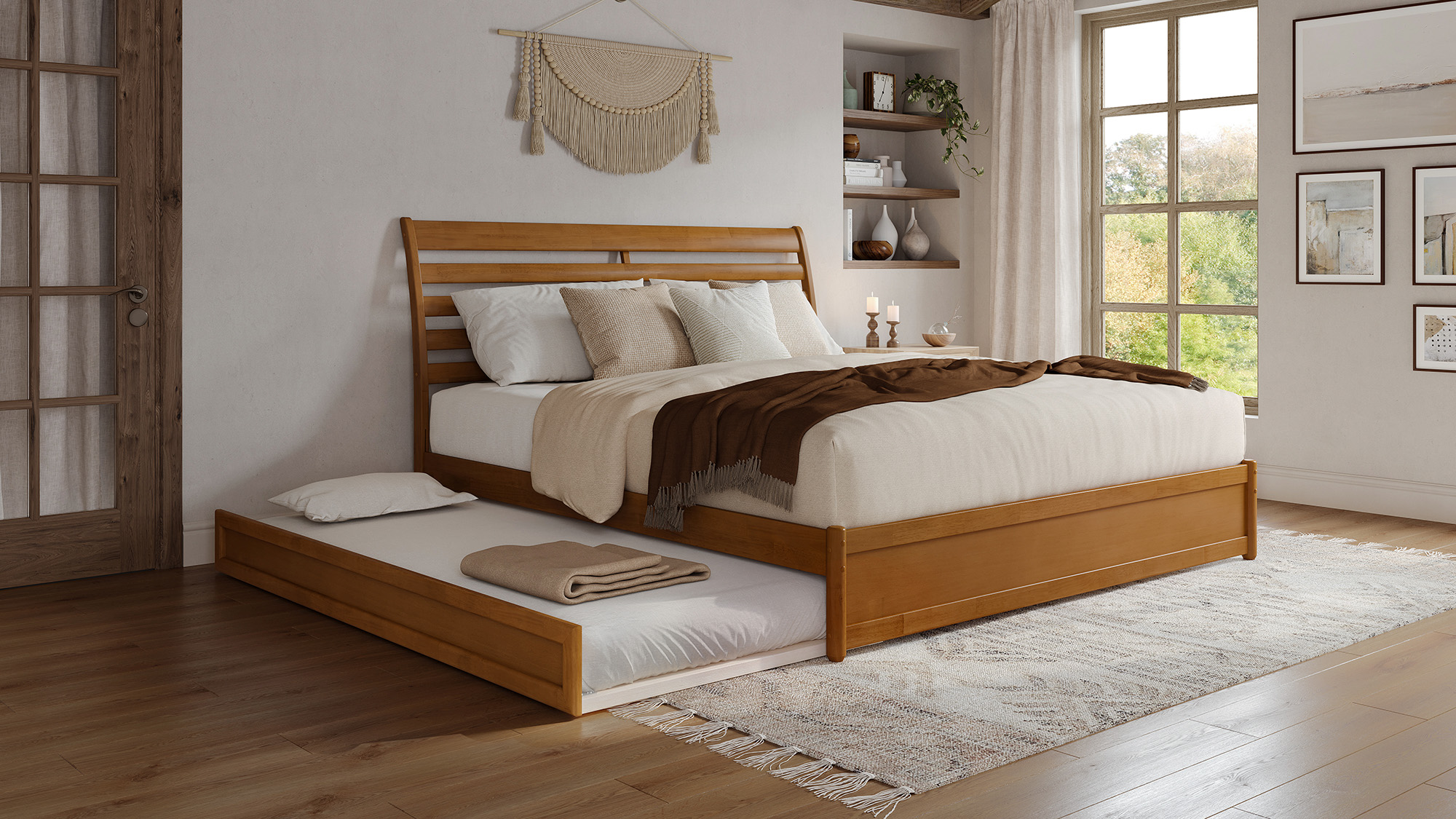
A trundle bed is a practical way to add another place to sleep without making the room feel crowded every day. It gives you extra sleep space when you need it, then tucks away when the room returns to normal use.
That flexibility is what makes a trundle so useful. It can help a kids’ room handle sleepovers, make a guest room more adaptable, or allow a smaller space to do more without adding another full-time bed.
The right trundle setup depends on the room, who will use it, and how often the extra bed will be needed. This guide covers how trundle beds work, where they make the most sense, how different bed styles use them, and what to consider for mattress height, pull-out clearance, and everyday room layout.
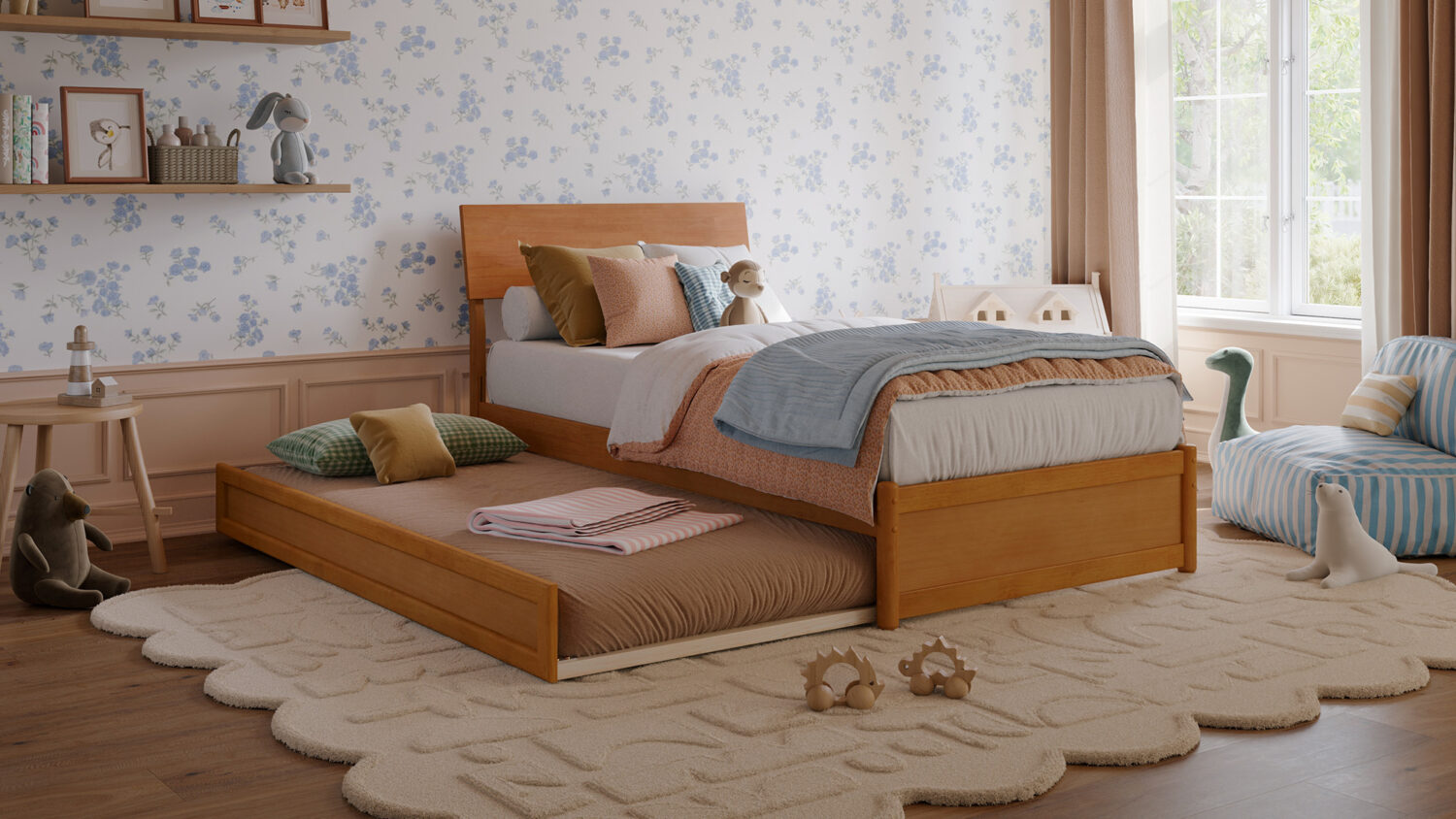
A trundle bed is a low sleep surface that stores beneath a main bed when it is not in use. When extra sleeping space is needed, the trundle pulls out from under the bed.
This makes it different from placing a second bed in the room. A trundle gives you another sleep option, but it does not take over the floor plan all the time.
Trundles are commonly used with standard or platform beds, daybeds, and bunk beds. Depending on the room, they can work well for children, overnight guests, visiting family, or flexible spaces that need to serve more than one purpose.
A good flexible room should be easy to change. A child’s bedroom may need to handle a sleepover. A guest room may need to sleep more than one person. A home office may need to become a guest space for the weekend.
A trundle bed supports that kind of use because the extra mattress is available only when needed. During the day, the room can stay open. At night, the trundle can create another sleep surface without requiring a permanent second bed.
That makes trundles especially helpful in rooms where space matters, but comfort still matters too. They are not just about saving space. They are about making the room more prepared without making it feel overfilled.
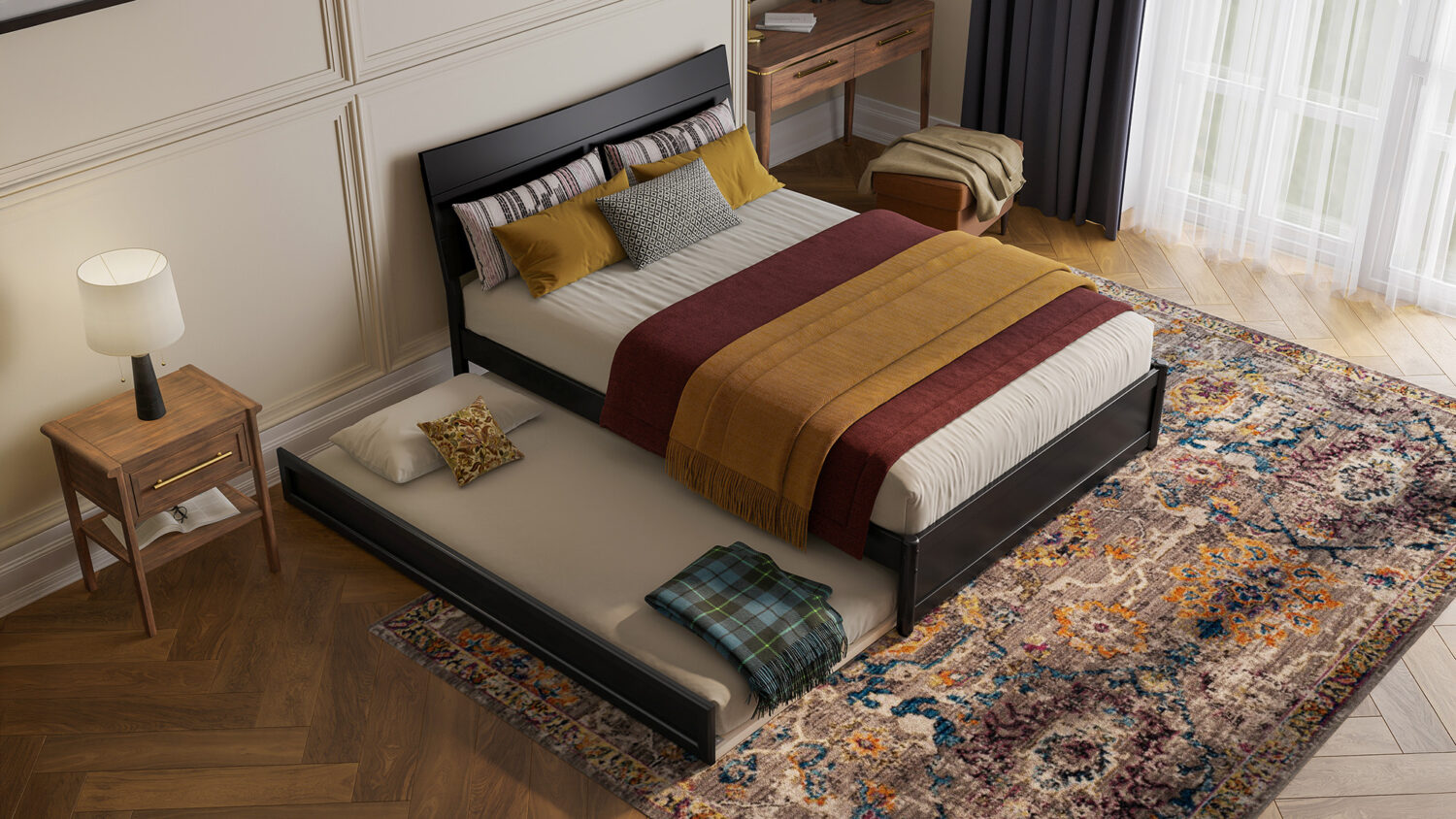
Before choosing a bed with a trundle, think about who will actually sleep on it.
In a kids’ room, a trundle can be useful for sleepovers, siblings, cousins, or visiting friends. It gives children an extra place to sleep without needing another bed in the room all the time.
In a guest room, a trundle can make the space more versatile. It can help accommodate an extra guest while keeping the room calm, open, and easy to style between visits.
In a shared bedroom, a trundle may add flexibility as family needs change. It can provide another sleep surface when needed while still leaving room for storage, play, or everyday movement.
If the trundle will be used often, comfort and access should be a bigger part of the decision. If it will be used occasionally, the main priority may be keeping the room open and easy to use.
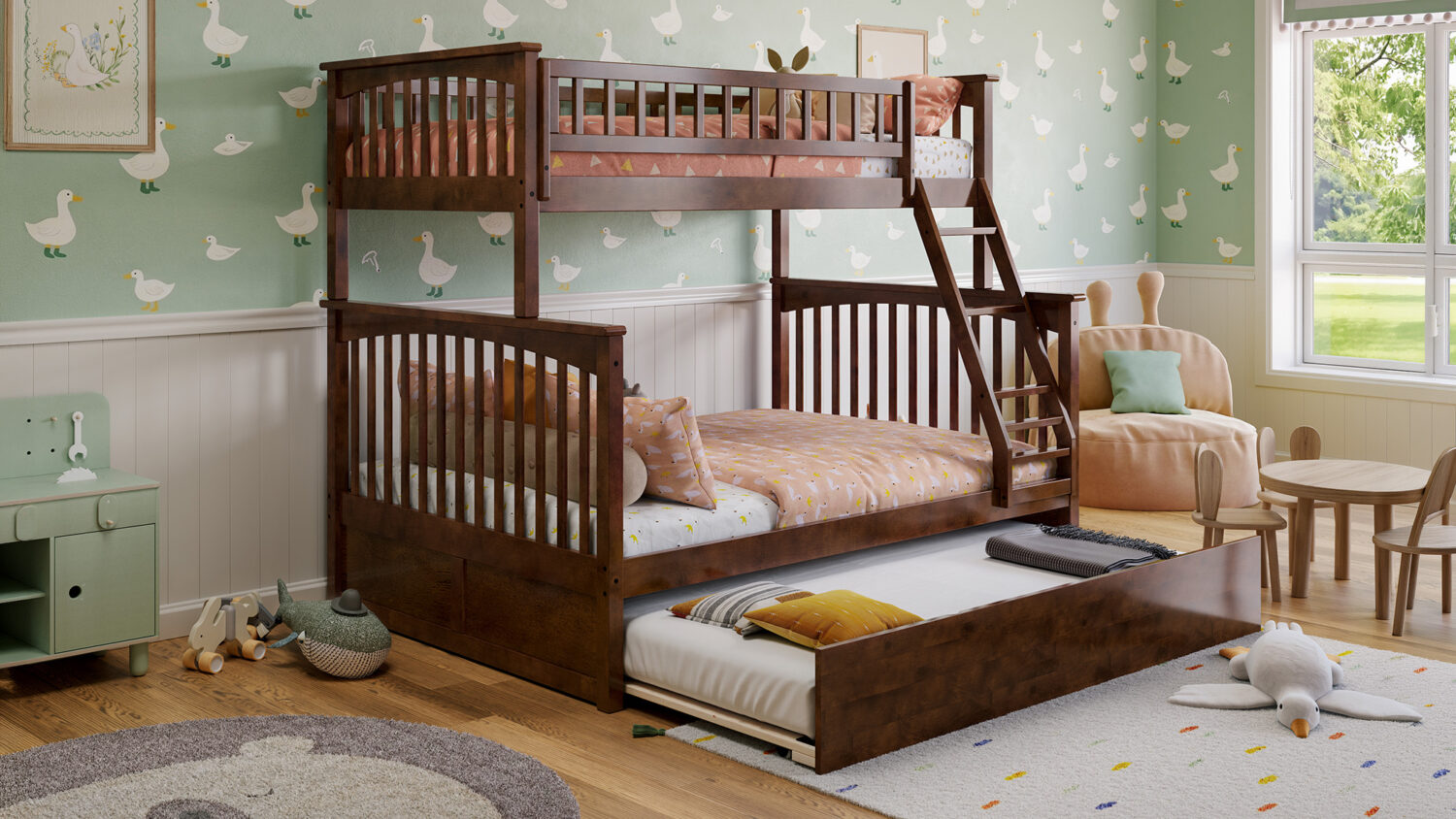
Not every trundle bed serves the same purpose. The best choice depends on the type of room and the main bed style.
A platform bed with a trundle can work well in a child’s room, teen room, or guest room where you want a traditional bedroom layout with an extra sleep option.
A daybed with a trundle can be especially useful in a room that needs to act like more than a bedroom. During the day, a daybed can feel more like a lounge or sitting piece. At night, the trundle adds another place to sleep.
A bunk bed with a trundle can offer the most sleeping flexibility. This type of setup can be helpful for shared bedrooms, larger families, frequent sleepovers, or rooms that need to accommodate guests without using several separate beds.
If you’re considering a bunk bed with a trundle, our bunk bed buying guide covers sizing, ladder and staircase designs, storage, trundle options, and other features to consider for a family bedroom.
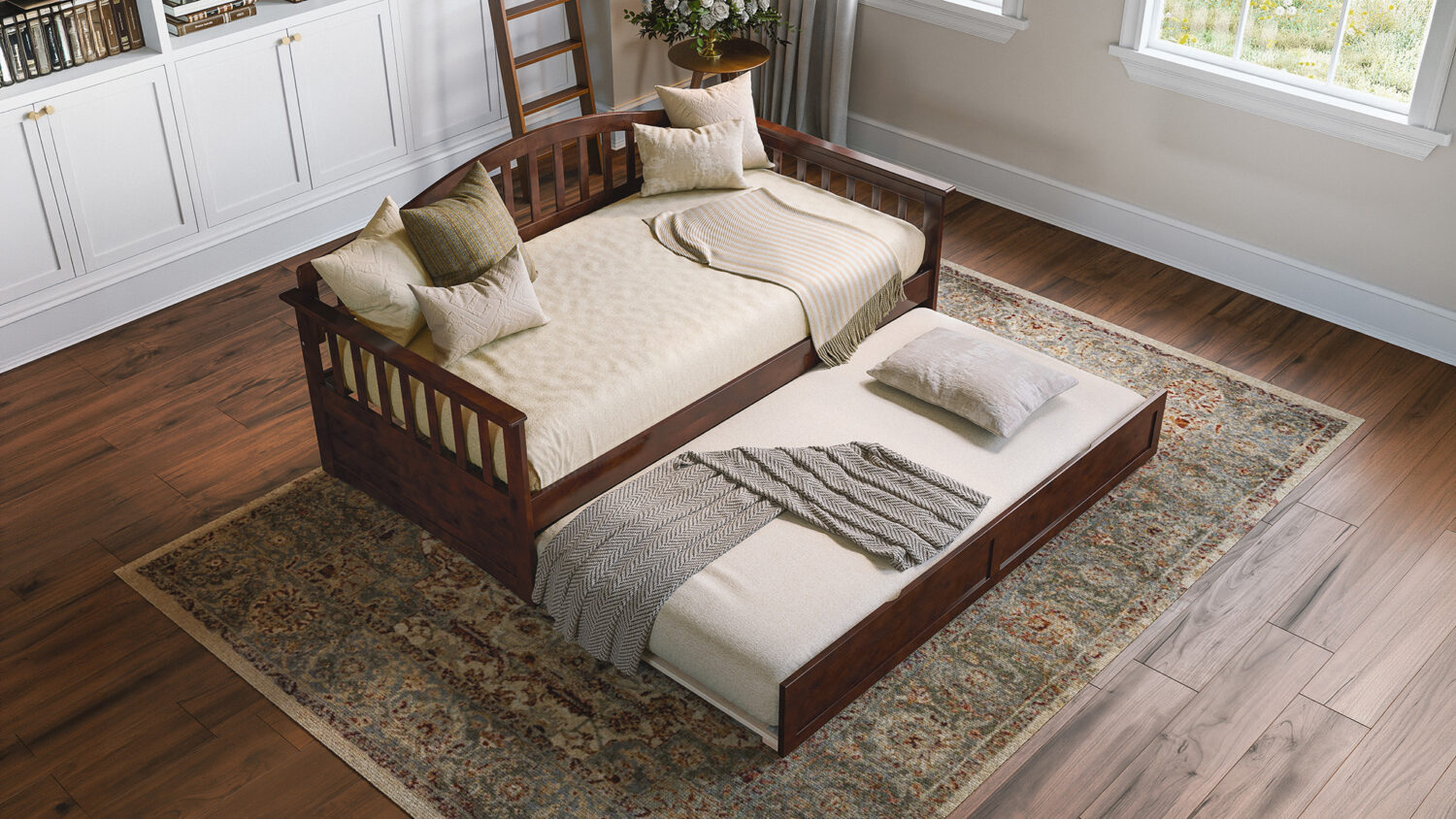
A trundle sits beneath the main bed, so mattress height matters. The mattress needs to fit properly under the bed and still allow the trundle to slide in and out as intended.
Before choosing a mattress for a trundle, always check the product details for the recommended mattress size and height. A mattress that is too tall may make the trundle difficult to close or prevent it from fitting correctly beneath the frame.
Room clearance matters too. A trundle saves space when stored, but it still needs open floor space when pulled out. Rugs, nightstands, dressers, closet doors, and nearby walls can all affect how easy the trundle is to use.
A trundle works best when both versions of the room feel comfortable: the everyday layout and the pulled-out sleeping layout.
It is easy to think about how a bed looks when the trundle is closed, but the open layout matters just as much.
Before choosing a trundle bed, imagine the room at night with the trundle pulled out. Can someone still walk through the space? Can drawers and doors still open? Is there enough room to get in and out of both beds comfortably?
This is especially important in smaller bedrooms and children’s rooms, where furniture often sits close together. A trundle should make the room more useful, not harder to move through.
The best trundle setup feels natural in both positions. It should look clean when tucked away and feel comfortable when opened.
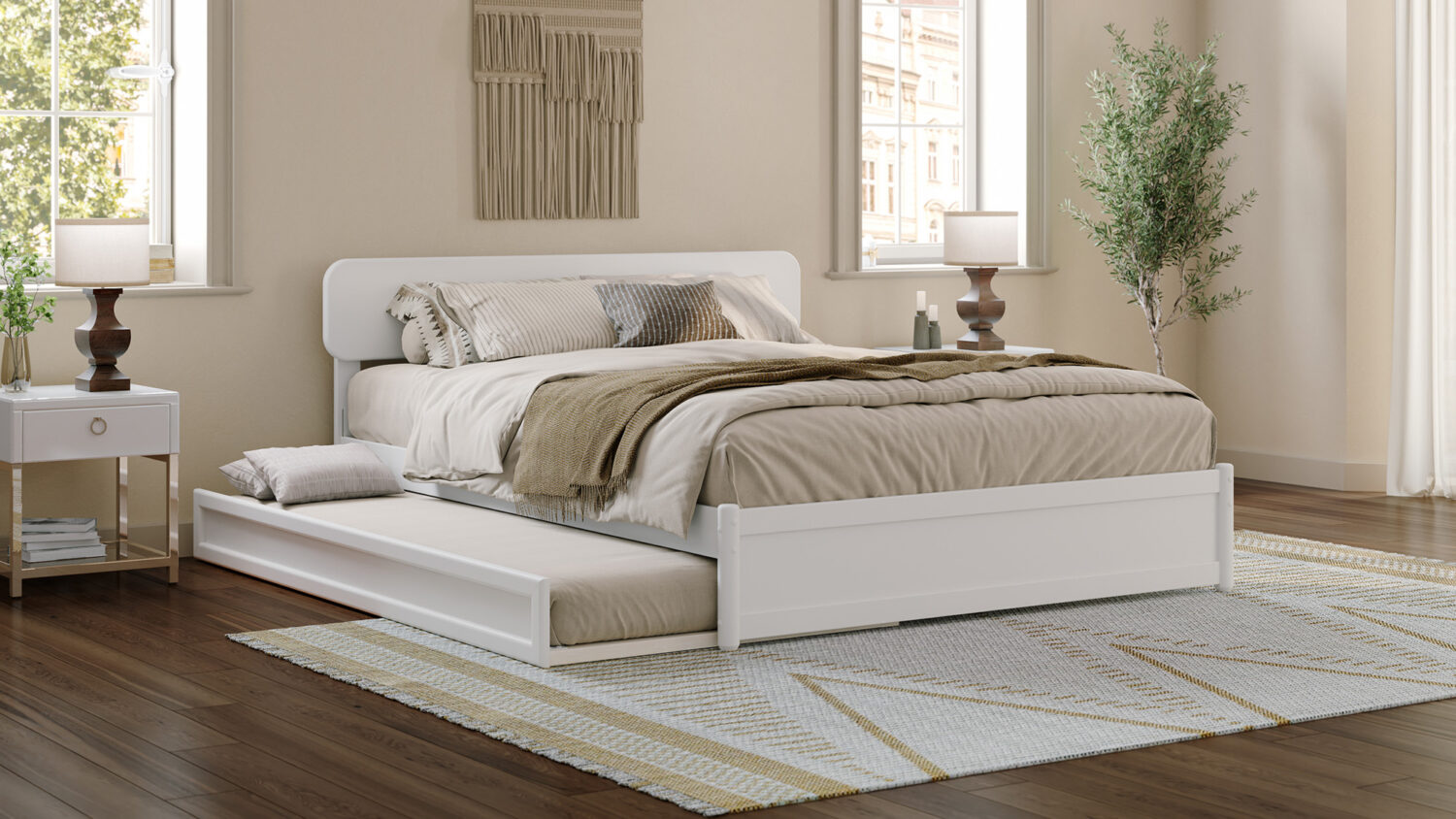
Trundle beds are most useful in rooms that need to stay flexible. They work especially well when extra sleep space is helpful, but a second permanent bed would make the room feel too crowded.
In kids’ rooms, a trundle can make sleepovers, siblings, cousins, or visiting friends easier to accommodate without taking away everyday play space. In guest rooms, it can help the space welcome more than one sleeper while still feeling calm and open between visits.
A daybed with a trundle can be a smart choice for multi-use rooms, especially spaces that shift between an office, sitting room, and guest room. A bunk bed with a trundle can add another sleep option for shared bedrooms, larger families, or homes where sleepovers happen often.
The point is not to fit as many beds as possible into one room. The point is to give the room more flexibility while keeping it comfortable, organized, and easy to live with.
A trundle is practical, but the main bed should still feel like a real furniture piece. It should not look like a workaround or a temporary solution.
Solid wood beds can bring warmth, structure, and a more grounded feeling to a room. Natural wood tones add texture, while painted finishes can help the space feel brighter, softer, or more classic.
This matters because a bed with a trundle often becomes the anchor of the room. Whether it is used in a child’s bedroom, guest room, or flexible space, the bed should help the room feel finished even when the trundle is tucked away.
The best trundle bed adds function without making the room feel overly practical. The trundle gives the room more options, while the bed itself sets the tone.
A trundle bed is a smart choice when a room needs more sleeping flexibility, but not another full-time bed. It can make a kids’ room better prepared for sleepovers, help a guest room accommodate more than one sleeper, or give a smaller space more function without making the room feel crowded every day.
The best trundle setup depends on how the room will be used. A bed with a trundle works well when you want a traditional bedroom layout with an extra sleep option. A daybed can be a thoughtful choice for a guest room, office, or sitting room that needs to do more than one job. A bunk bed with a trundle can add even more sleeping flexibility for shared rooms, kids’ rooms, and frequent sleepovers.
Before choosing, think about who will use the trundle, how often it will be pulled out, what mattress height is recommended, and whether the room still feels comfortable when the trundle is open. The goal is not simply to add another mattress. It is to choose a bed that gives the room more options while still feeling organized, comfortable, and complete.
Explore AFI Furnishings’ beds with trundle options, daybeds, bunk beds, and compatible bed trundles to find the setup that best fits your space.